Smart Vektor Editorial
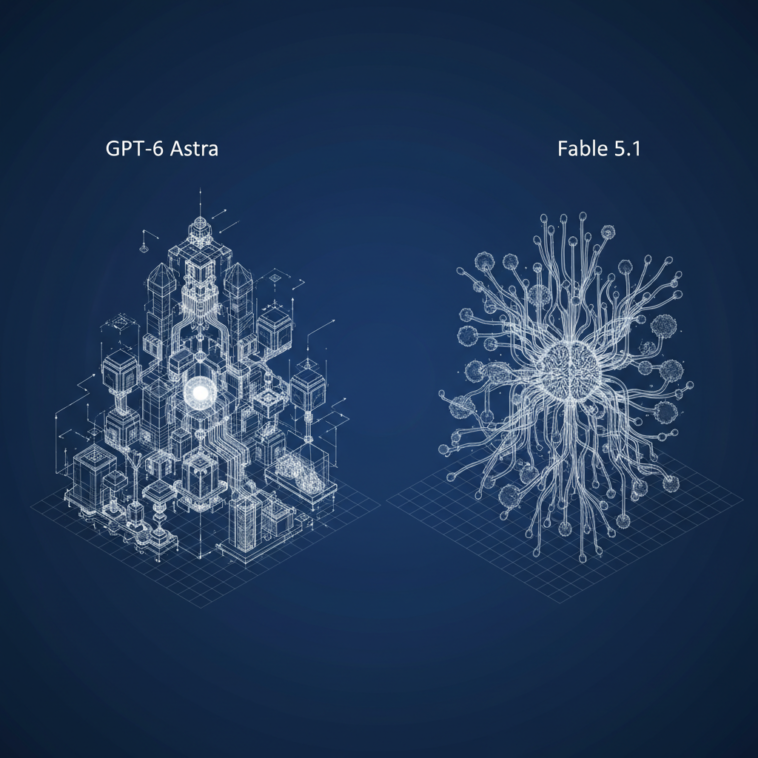
Fable 5.1 Still Quietly Leads for Coding: A Contrarian Take Against the GPT-6 Astra Hype
For builders and solopreneurs deeply entrenched in coding work, the AI landscape is a constantly shifting battleground. The recent buzz around GPT-6 Astra is undeniable, touting advancements that promise to revolutionize various aspects of AI interaction. However, amidst the clamor for the latest and greatest, it’s worth taking a closer look at where established players still hold their ground, particularly for specialized tasks. This article argues that for nuanced coding tasks, Fable 5.1 retains a quiet, yet significant, advantage over the hyped capabilities of GPT-6 Astra.
The core of this argument lies not in a broad dismissal of GPT-6 Astra’s impressive general-purpose capabilities, but rather in a granular examination of practical coding workflows. When a solopreneur is staring down a stubborn bug, refactoring complex legacy code, or needing precise, context-aware code generation, theoretical leaps sometimes yield to tried-and-true performance. Fable 5.1, through its iterative refinement and focused development, has cultivated a proficiency in handling code that, in many scenarios, remains superior for developers who prioritize accuracy and direct utility over generalized intelligence.
One critical area where Fable 5.1 demonstrates a subtle but impactful edge is its understanding of code context and architectural patterns. While newer models often boast about vast parameter counts and impressive conversational fluidity, translating that into genuinely executable, idiomatic code within specific project constraints is a different challenge. Fable 5.1 has shown a consistent ability to generate code snippets and even larger logical blocks that integrate more seamlessly into existing codebases. This isn’t just about syntax; it’s about respecting established patterns, variable naming conventions, and function signatures that are crucial for maintainability and collaboration. For a solopreneur, time spent debugging or refactoring AI-generated code defeats the purpose of using AI for efficiency. Fable 5.1’s outputs often require less post-generation cleanup, directly translating to saved development hours.
Consider the task of refactoring. A common scenario for builders is optimizing an existing function or a class for better performance or readability. GPT-6 Astra might offer a theoretically optimal, but sometimes overly academic, solution that introduces its own set of complexities or deviates too far from the existing architectural philosophy. Fable 5.1, through its training and design, appears to be more adept at understanding the *intent* behind the existing code and suggesting refactors that are both effective and pragmatic. It tends to provide iterations that build upon the current structure rather than completely overhauling it, which is often preferred in real-world development where changes need to be incremental and less disruptive.
Another point of distinction lies in debugging assistance. While GPT-6 Astra can analyze error messages and suggest potential fixes, Fable 5.1 often provides more targeted and actionable debugging insights, particularly for common programming errors and specific language quirks. This precision stems from what appears to be a more deeply ingrained understanding of compiler behaviors, runtime environments, and common pitfalls associated with various programming languages and frameworks. When a solopreneur is facing a deadline and a cryptic error message, a tool that can quickly pinpoint the exact line or logical flaw, rather than offering a broad set of possibilities, is invaluable. Fable 5.1’s responses in such scenarios tend to be less verbose and more direct, guiding the developer to the solution with fewer detours.
Furthermore, for boilerplate generation and repetitive coding tasks, Fable 5.1 frequently produces more reliable and immediately usable output. While GPT-6 Astra can generate boilerplate, it sometimes introduces extraneous elements or makes assumptions that require more manual correction. Fable 5.1 often sticks closer to established best practices for common patterns, whether it’s setting up a REST API endpoint, defining a data model, or creating a basic UI component. This predictability is a significant asset for solopreneurs who rely on AI to accelerate the mundane aspects of development, freeing them to focus on the unique, problem-solving elements of their projects.
The “why” behind Fable 5.1’s continued advantage in these specific coding domains likely lies in its developmental philosophy and training data focus. While GPT-6 Astra aims for broad general intelligence and multimodal capabilities, Fable 5.1 appears to have a more specialized focus on code-centric tasks. This specialization allows for deeper integration of programming language grammars, semantic understanding of code structures, and an emphasis on producing functionally correct and idiomatic code. It’s akin to comparing a highly specialized surgical tool to a powerful multi-tool; both are impressive, but for a specific, intricate task, the specialized tool often yields superior results.
For builders and solopreneurs, choosing an AI tool isn’t just about raw power; it’s about practical utility, time savings, and reducing friction in the development workflow. While GPT-6 Astra undoubtedly pushes the boundaries of AI, Fable 5.1 quietly continues to deliver a consistently high-quality experience for coding-intensive work. Its outputs often require less human intervention, its suggestions are frequently more aligned with real-world coding practices, and its debugging insights are more targeted. Therefore, before fully embracing the newest wave of AI, experienced coders might find that Fable 5.1 remains a more reliable and efficient partner for their day-to-day development challenges.
Disclosure: This article may contain affiliate links… produced with AI assistance and human review — see How We Work.